
| +420 549 495 952 |
| hofr@lablifeb.com |
| Building C02/2.13 Kamenice 753/5 625 00 Bohunice - Brno |

Research
how and why life essential proteins and nucleic acids interact
affinity and kinetics of nucleoprotein complexes formation using quantitative biochemical and biophysical approaches
functions of biomolecules in vitro and in live cells by advanced spectroscopy and microscopy techniques
our quantitative results to reveal mechanisms how biomolecules contribute to genome stability, cell regeneration, aging and carcinogenesis
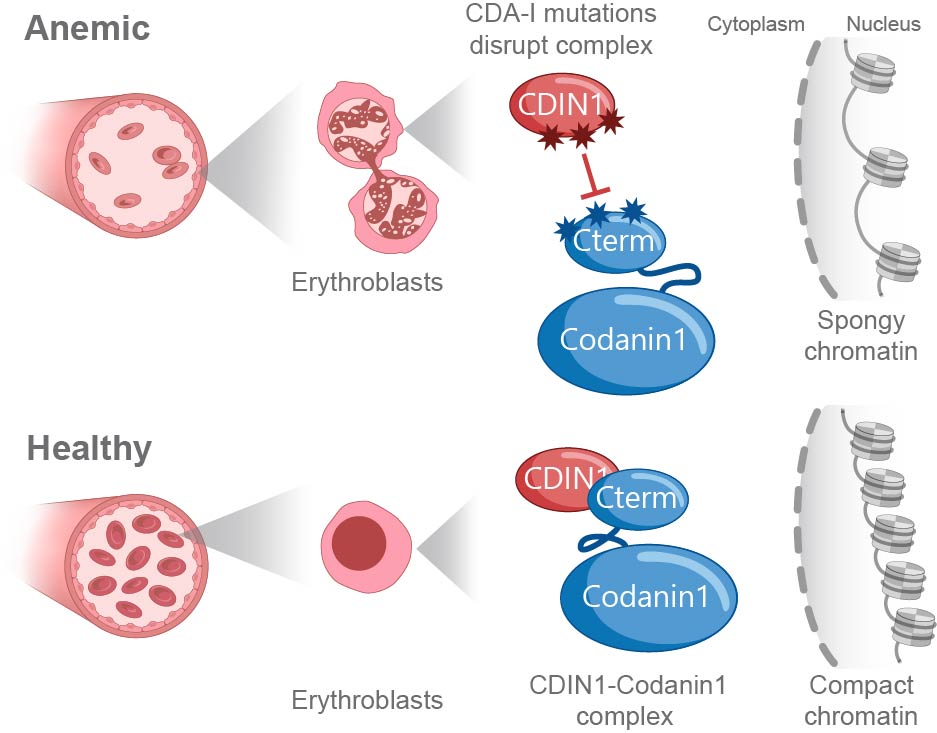
Congenital dyserythropoietic anemia type I (CDA‑I) is associated with mutations in Codanin1 and CDIN1. We investigate the molecular mechanism linking mutate protein variants to defective erythroblast spongy chromatin that remind "Swiss cheese" under microscope. We combine biophysical, structural, and cellular approach to define how CDA‑I mutations disrupt protein partner competition, impair nuclear histone supply, and reshape chromatin architecture. Using quantitative binding analysis, exchange kinetics, and microscopic structural mapping, we reveal how selected mutations alter chromatin and erythroblast function. We employ advanced cellular models analyzed by high‑resolution electron microscopy, and genome‑wide accessibility profiling to reveal mutation‑induced chromatin alterations. Together, we define a unified mechanistic model of CDA‑I pathogenesis and identify molecular markers relevant for clinical variant interpretation.
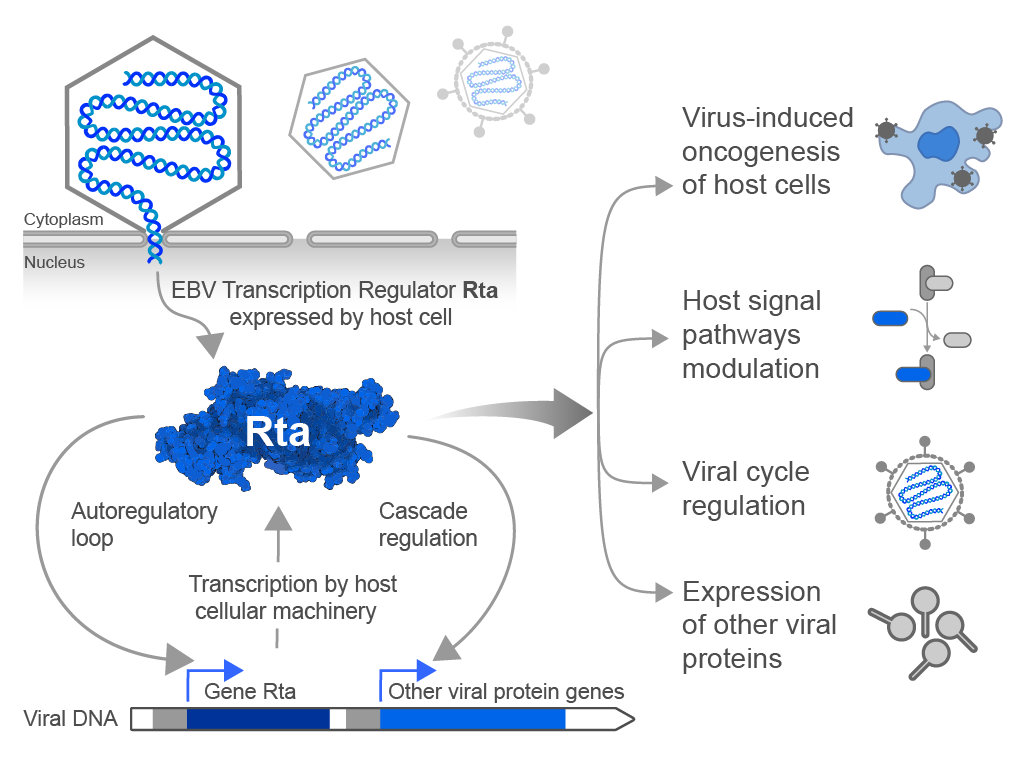
Epstein–Barr virus (EBV) infects more than 90% of people worldwide, is commonly transmitted via saliva which earned it the nickname “kissing” virus, and can produce in infected tissues as up to 100,000 billion viral particles. EBV targets B lymphocytes and epithelial cells, drives cancers that depend on the infected cell type, and is linked to mononucleosis and autoimmune conditions including a strong epidemiological association with multiple sclerosis. We map how the lytic activator Rta recognizes DNA, multimerizes, and concentrates in nuclear foci to remodel chromatin and trigger focal host‑chromosome disruption. Combining quantitative fluorescence, targeted mutagenesis, bioinformatic modeling, AFM, and genome‑wide chromatin profiling, we identify the residues and domains that mediate sequence‑specific contacts and cooperative Rta assembly on DNA, reveal Rta’s role as a critical switch from latency to lytic replication, and expose molecular targets for interventions to block EBV reactivation and its pathogenic consequences.
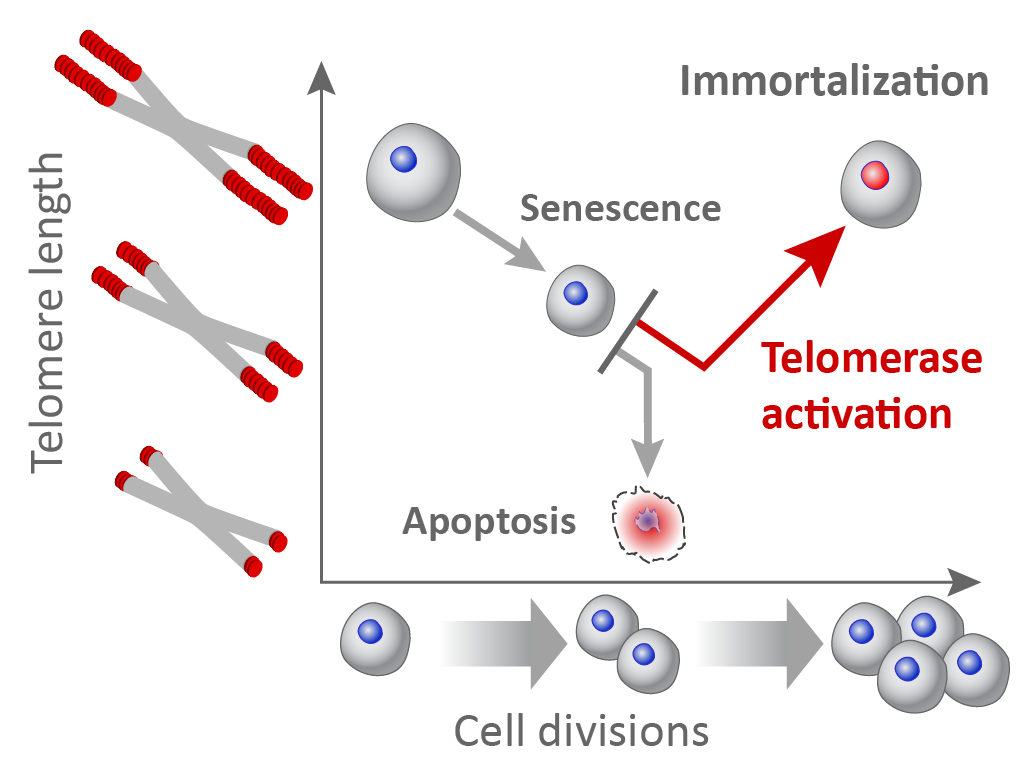
Telomeres are complexes of DNA and proteins that are located at chromosome ends. The main function of telomeres is to protect genetic information stored in internal parts of chromosomes. Telomeres serves as molecular clock of cell life. Telomeres shorten during each cell division. If telomeres shorten below a certain length, cells die. Telomeric DNA covered by telomeric protein might form lasso-like loops that hide very ends of DNA and protect chromosome ends against their unwanted recognition as damaged DNA. We want to know how human telomeric proteins affect DNA and other proteins in order to understand molecular mechanism of the protective function of telomeres.
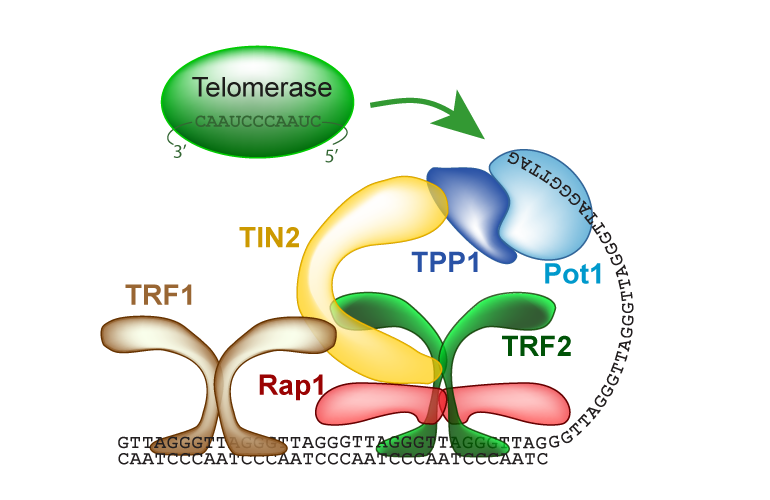
Telomerase is an enzyme that extends telomeric DNA. Telomerase is idle in somatic cells but it is highly active in cancer and germ cells. Thus, telomerase contribute to “immortalization” of frequently dividing germ cells and unfortunately also cancer cells. Telomerase action is affected by telomeric proteins. We want to understand mechanism how to turn off telomerase activity in cancer cells and this way defeat cancer more effectively.
If you think that OUR experience, know-how and instrumentation is compatible with YOUR ideas and research topics, we can collaborate on an exciting project.
Contact us
| +420 549 495 952 |
| hofr@lablifeb.com |
| Building C02/2.13 Kamenice 753/5 625 00 Bohunice - Brno |
© 2026, LifeB Webdesign: Lukáš Hladeček